The human face is a highly coordinated system of muscles that enables expression, communication, and essential protective reflexes. Among these, the orbicularis oculi and orbicularis oris—collectively referred to as the orbicularis muscles—play a central role. These circular muscles are responsible for eyelid closure and lip movement, respectively, and are critical for functions such as blinking, speech articulation, and food intake. What makes these muscles clinically significant is their exclusive innervation by the facial nerve (cranial nerve VII). Any disruption in this nerve’s function directly impacts orbicularis muscle performance, making them key indicator in neurological and neuromuscular assessments. Electromyography (EMG) offers...
Electromyography (EMG) and nerve conduction studies (NCS) are indispensable tools in modern neurodiagnostics. They help clinicians evaluate the electrical activity of muscles and the integrity of peripheral nerves, playing a central role in diagnosing neuropathies, myopathies, and neuromuscular junction disorders. Yet, despite the sophistication of modern EMG devices, clinical practice often focuses narrowly on basic motor and sensory conduction studies and routine needle EMG. This leaves out several advanced tests that an EMG device can perform—tests that are crucial for early detection, accurate differential diagnosis, and improved patient outcomes. Neglecting these tests can lead to misdiagnosis, delayed treatment, or unnecessary...
The field of neuromuscular diagnostics has evolved significantly, enabling healthcare professionals to assess nerve conduction and muscle function with greater precision. Among the various techniques employed in electromyography (EMG), Middle Latency Response (MLR) and Late Latency Response (LLR) play crucial roles in evaluating peripheral and central nervous system pathways. These responses provide valuable insights into neurological disorders, helping clinicians diagnose and monitor conditions affecting the motor and sensory pathways. Clarity Medical, a leading innovator in diagnostic medical technology, has integrated MLR and LLR analysis into its EMG devices, enhancing the accuracy and efficiency of neuromuscular assessments. Understanding MLR and LLR...
Explore the science behind Hreflexes and Breflex, their clinical relevance, and how Clarity Medical’s EMG devices deliver unmatched accuracy and reliability in their measurement.
In today’s healthcare landscape, technology plays a crucial role in improving patient care and operational efficiency. Among the many advancements, portable Electromyography and Nerve Conduction Studies (EMG-NCS) devices stand out for their potential to revolutionize neuromuscular diagnosis. These devices offer significant clinical and financial benefits, enhancing both patient experience and outcomes. The Clinical Value of EMG-NCS Devices EMG-NCS devices are essential tools in diagnosing a variety of neuromuscular disorders. These conditions include neuropathies, myopathies, carpal tunnel syndrome, and other nerve or muscle-related issues. Traditionally, EMG-NCS testing was confined to specialized labs due to the size and complexity of the equipment....
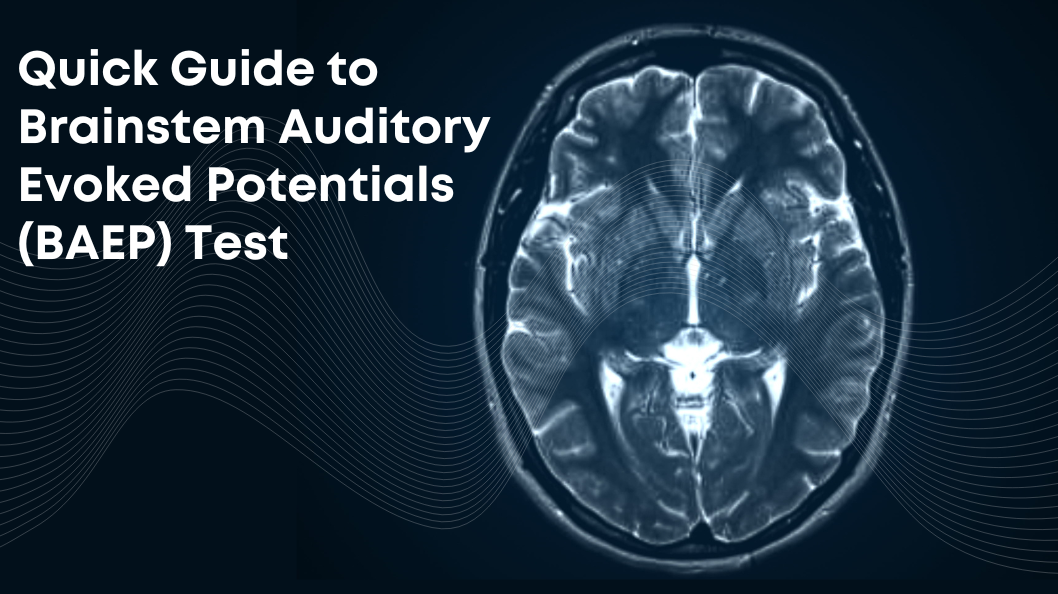
In the realm of neurodiagnostic, Brainstem Auditory Evoked Potentials (BAEP) test serves as a valuable tool for evaluating auditory pathway integrity and diagnosing various neurological conditions. This non-invasive procedure provides insights into the functioning of the auditory nerves and brainstem, aiding in the diagnosis and management of auditory disorders. What is Brainstem Auditory Evoked Potentials (BAEP) Test? Brainstem Auditory Evoked Potentials (BAEP) test, also known as Auditory Brainstem Response (ABR) test, is a neurophysiological assessment technique used to evaluate the integrity of the auditory nerve pathways from the inner ear to the brainstem. It involves recording the brain's electrical...